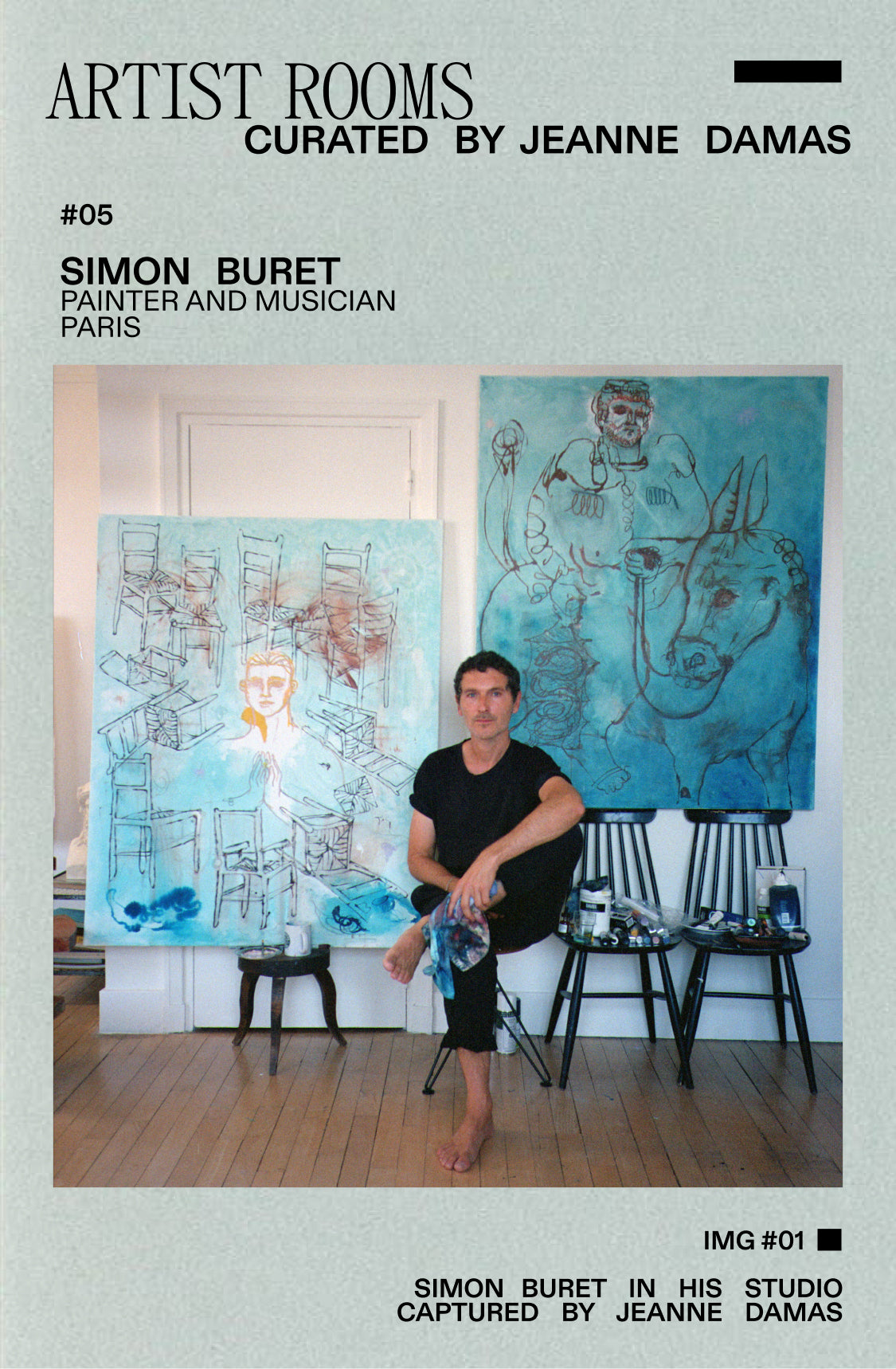
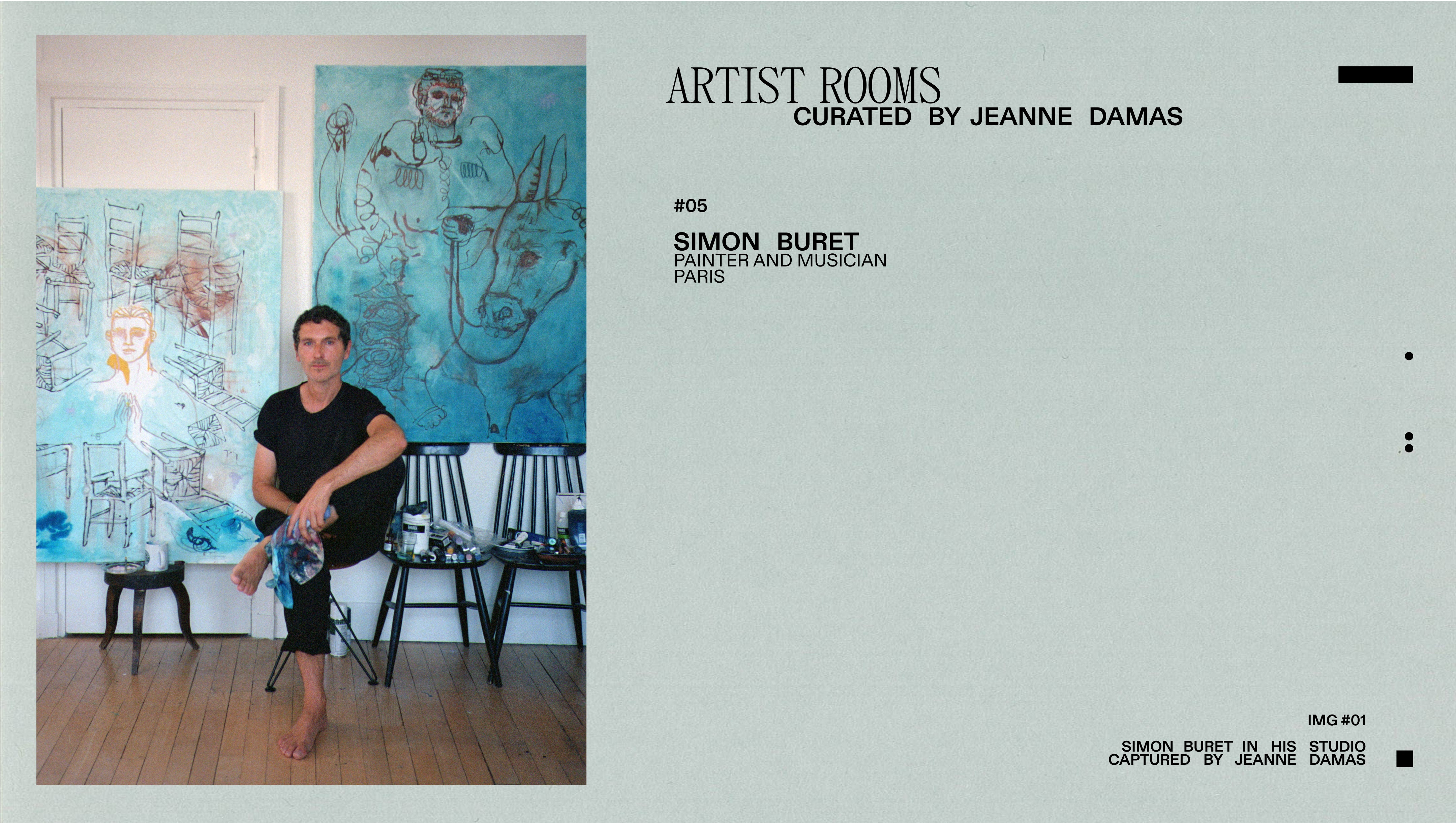
Singer of the duo AaRON, Simon Buret has, in recent years, established himself as a painter, creating an intimate and poetic universe where emotion and silence intertwine. Jeanne Damas met him in his apartment-studio in Paris — a suspended space, much like himself.
His new works will be shown at Enter Art Fair in Copenhagen with Nil Gallery at the end of August. He will also unveil his bronze sculpture Le Jour on September 18 at Rinck Gallery in New York.
INTERVIEW
JD: Do you remember the very first painting you ever made? Do you still have it?
SB: Yes, I remember it very well. It wasn’t really a “painting” in the formal sense. It was something very instinctive, very raw — almost like a discharge. More of a scream than an image. I think I still have it somewhere, folded or rolled up. It’s not a piece I would show, but it opened a door for me.
JD: How would you describe your style today? Do you follow a specific line or just let yourself be guided?
SB: I let myself be guided. My work is very gestural, very instinctive… There’s a rhythm to it, a kind of breathing. I like the material to stay alive, to escape me a little. I often work in layers, with transparency, sometimes mixing different elements.
What matters to me isn’t style in the aesthetic sense, but what the work stirs up — in me, and in others.
I try to express tension: between chaos and balance, strength and fragility. I don’t aim to smooth things out. I embrace contradiction, imperfection.
And more broadly, I think it speaks of desire and frustration — whether intimate or universal. We reflect the everyday world around us.Being an artist today means being in resistance. A poem is an act of rebellion, whether we want it to be or not.
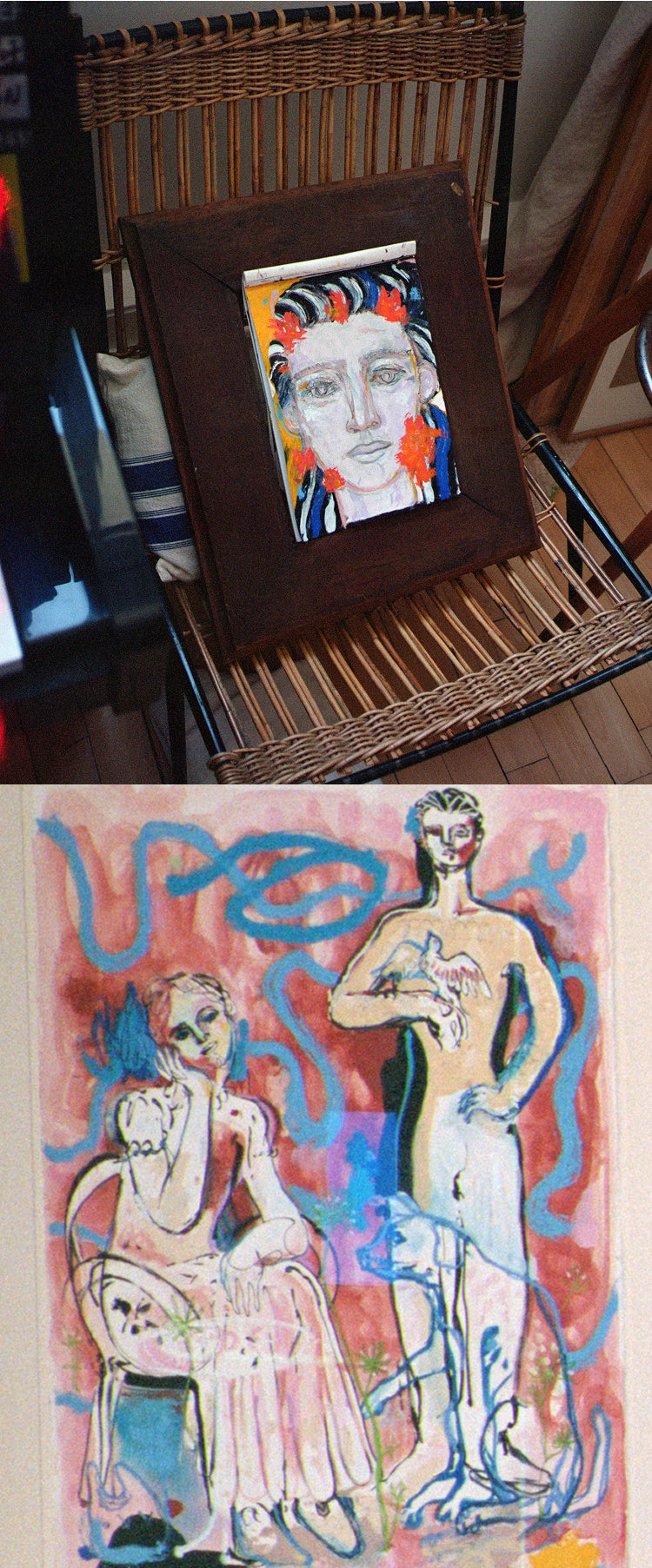
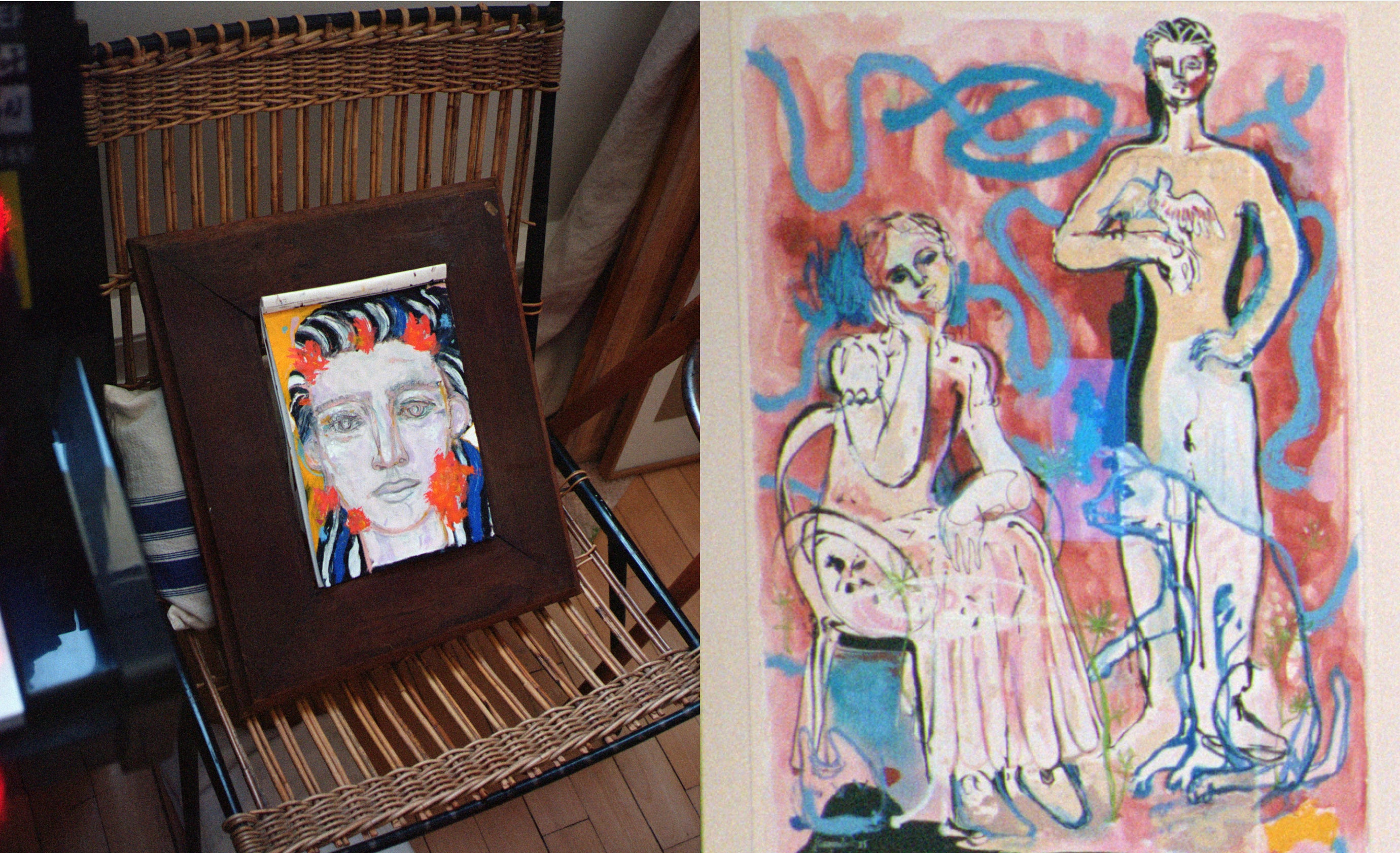
I try to express tension: between chaos and balance, strength and fragility. I embrace contradiction, imperfection.
Simon Buret
JD: People also know you as the singer of Aaron. What made you want to paint? Was it a natural progression or a real turning point in your life?
SB: I don’t think it was a turning point — more like a continuation. Painting and drawing have always lived in me. Even when I was fully immersed in music, this other need was there — quieter, more intimate.
At some point, I just stopped holding it back. It came naturally, but with a kind of urgency too — the need to transform things I couldn’t express with words or melodies.
JD: Which artists inspire you — in painting, music, or elsewhere?
SB: I’m inspired by those who dare to go where things shake. In painting, I’ve been deeply marked by Cy Twombly, Francis Bacon, and more contemporary artists like Marlene Dumas or Louise Bourgeois — especially in their relationship with the body and memory.
In music, I’m often drawn to voices or atmospheres, not genres.
And then there’s literature, poetry. Recently… Ritsos, Rumi, Bukowski. I read a lot. Words feed the images, and the thought process.
JD: Do you start a painting with a clear idea in mind, or do you let instinct take over?
SB: I search for the accident — the stain, the unexpected color that leads to form. I start with a sensation — sometimes a very strong emotion, sometimes just a void. But never with a clear idea or plan.
The gesture leads me — the material, the accidents. There’s always a moment when I lose control, and that’s often when it becomes interesting.
I try not to interfere too much, to let the work find its own shape. I’ve never finished a painting the way I thought it would be at the start.
JD: Do your music and your painting speak to each other? Do you feel bridges between the two?
SB: I’ve always thought that a song is a sound painting, and that a painting is a silent melody. The connection inside me probably lies there.
So yes — even if they don’t speak the same language. There’s the same drive, the same search for emotional honesty.
When I paint, I feel a certain rhythm. Sometimes I play music really loud — it ends up in the painting itself. Sometimes I work in silence. But either way, it’s an intense presence. Like an inner prayer.
And there’s also the link to the body, to breath. In the end, whether it’s a note or a line, it’s an attempt to say something you don’t quite know how to articulate.
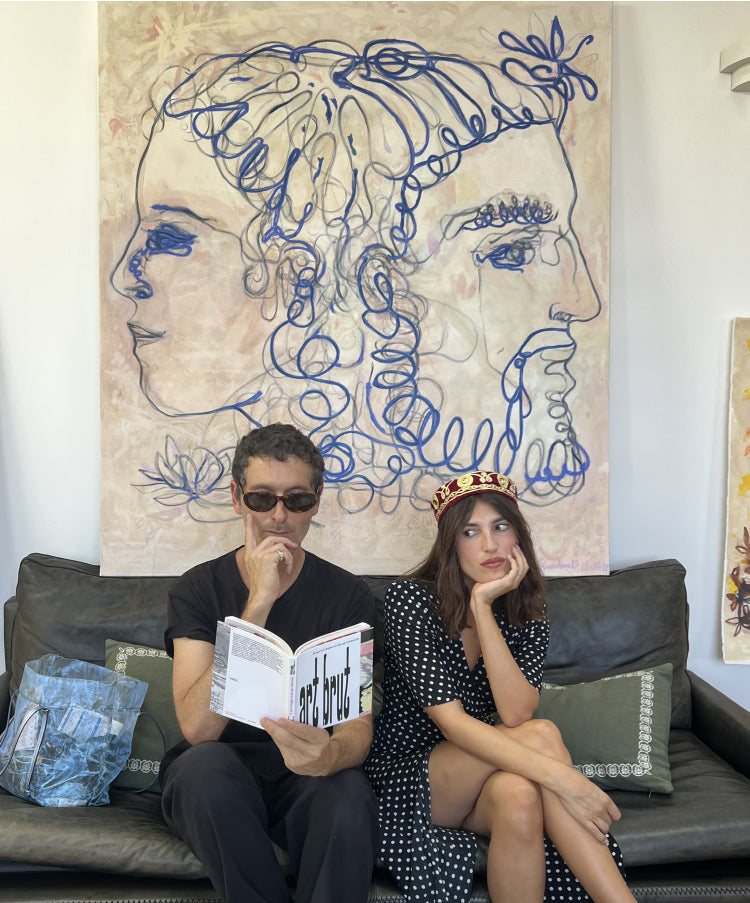
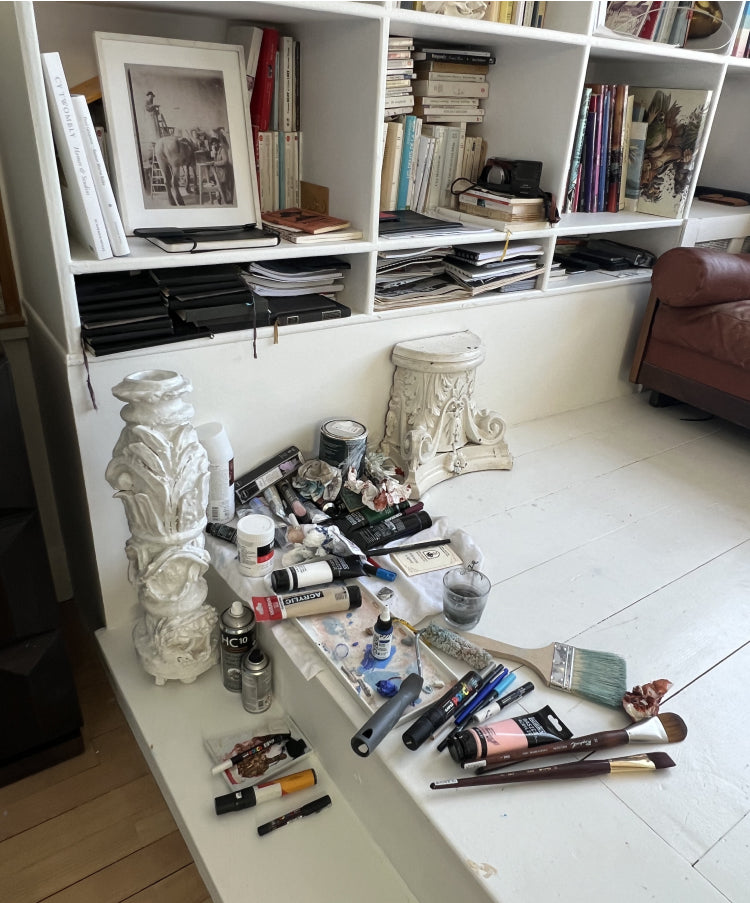
JD: I’m very sensitive to your personal universe. Your apartment is incredible — you can feel that every object has a story. Nothing seems random. Are there pieces that inspire you on a daily basis?
SB: Thank you, that means a lot. I like objects that live, that carry a trace, a memory. You often find them in my paintings — sometimes in details that are almost invisible to the eye, like talismans.
Some I brought back from travels (a lot of them), some were given to me, others I just found. I tend to keep a lot…
To me, a metro ticket from Bangkok has just as much value as a master painting. I think every object holds a poem. That’s what I work with — and what I love.
They’re like silent presences. I don’t look at them every day, but they create an ecosystem around me. A place of grounding and inspiration.
I love the idea of stationary travel, and the concept of the “object as poetic reaction.” My studio is full of them.
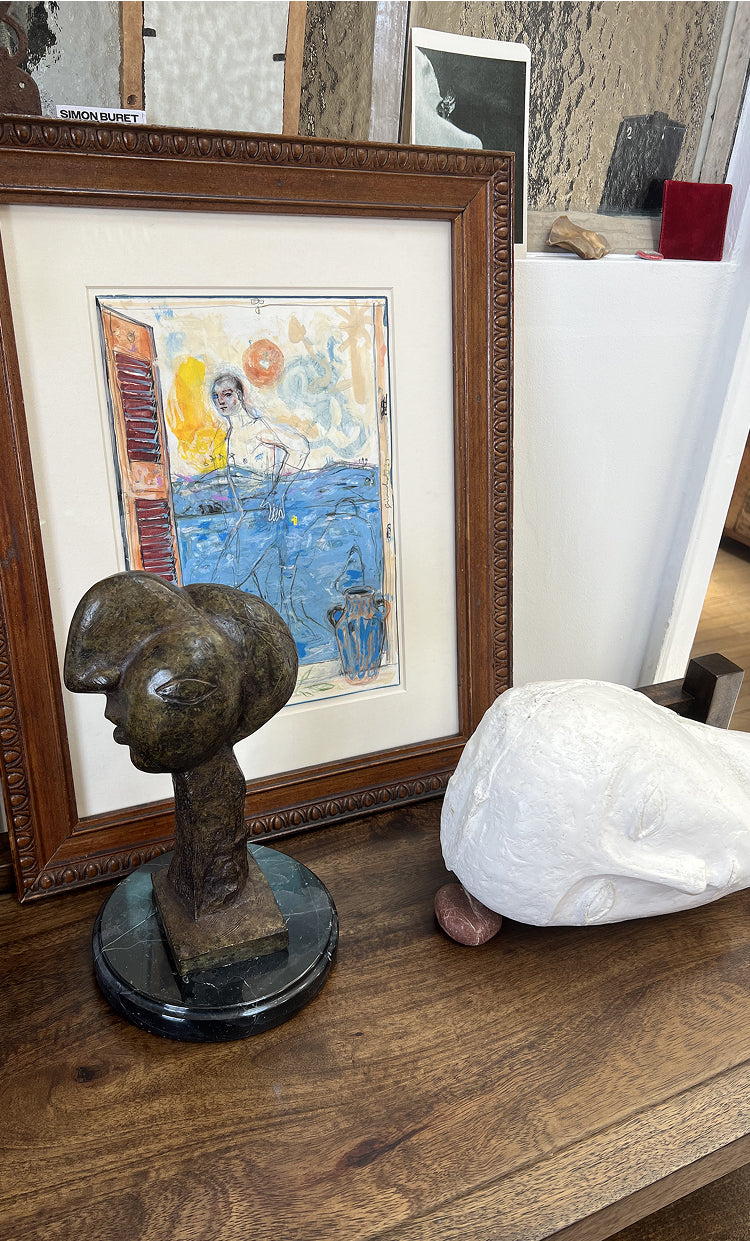
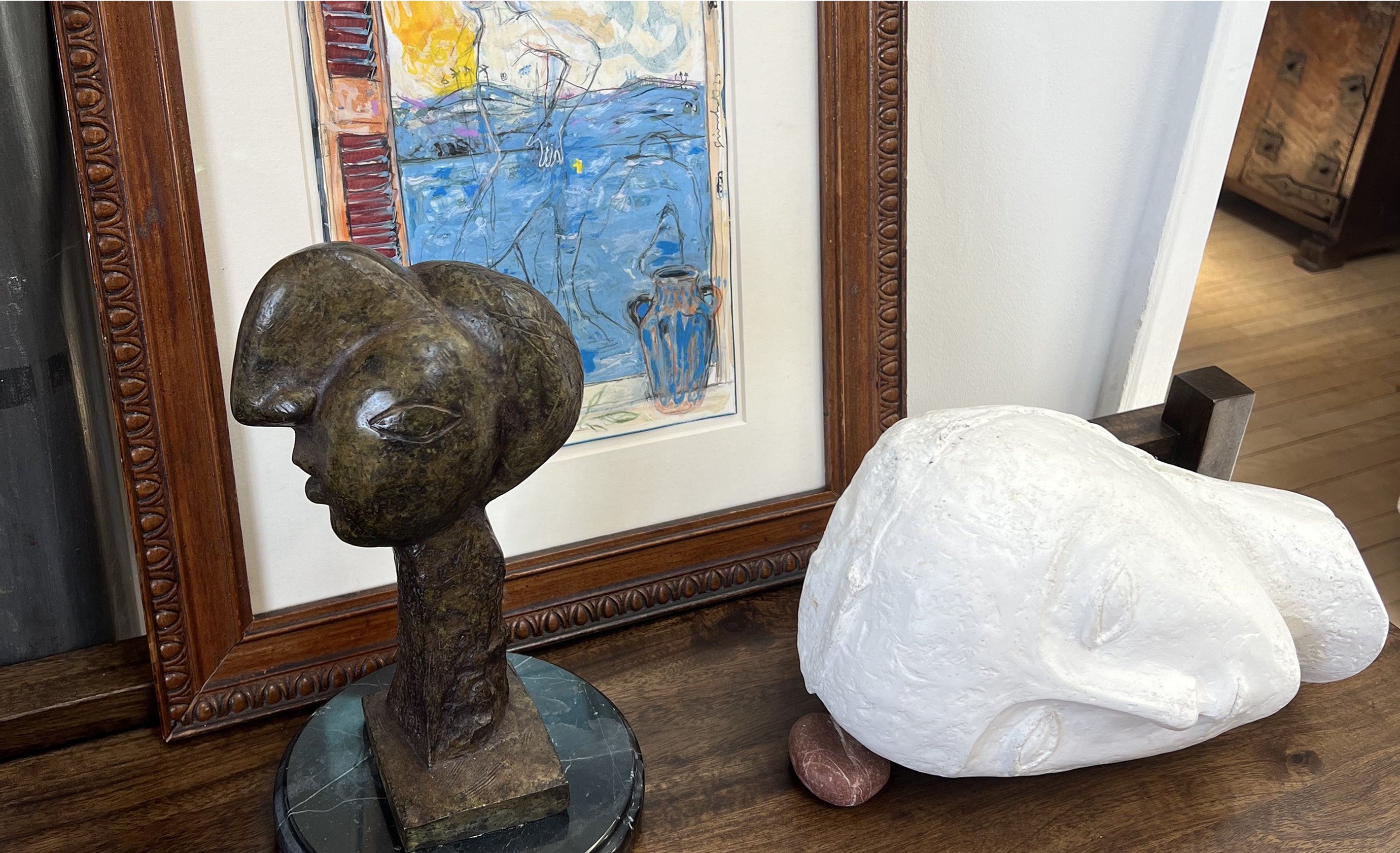
I’ve always thought that a song is a sound painting, and that a painting is a silent melody.
simon buret
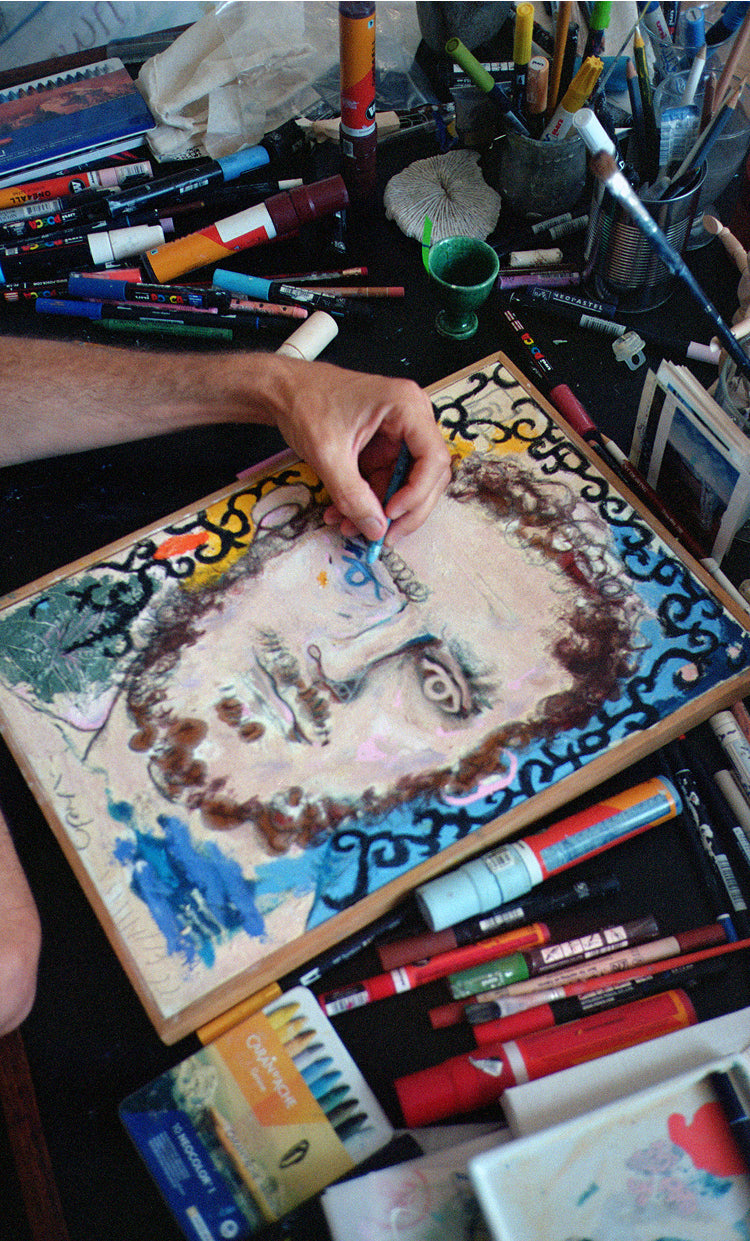
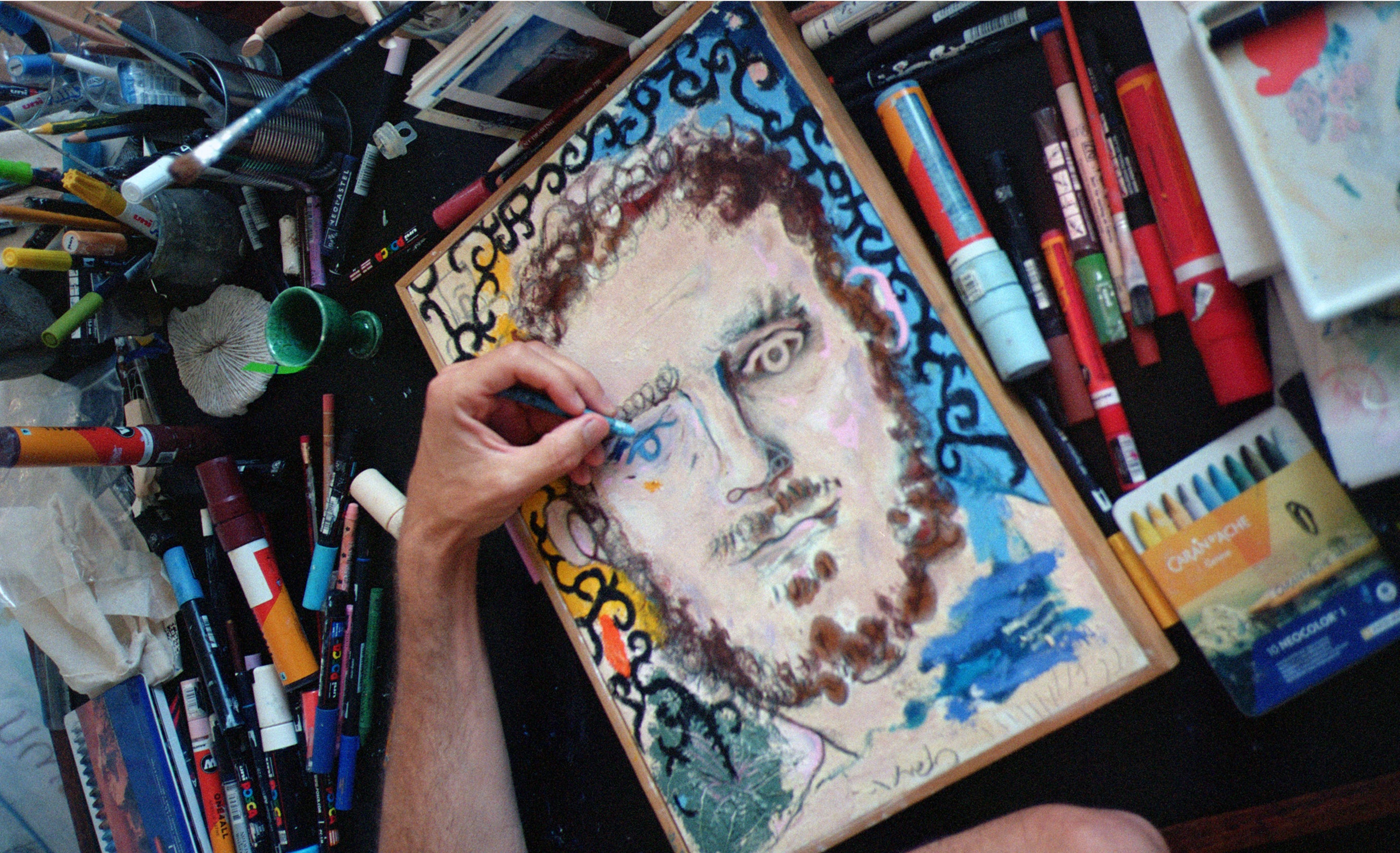
JD: Is painting a physical act for you? Do you feel it in your body, like you do on stage?
SB: Completely. Sometimes it’s even more physical than being on stage, because I’m alone with the material — there’s no external adrenaline.
My whole body is involved, especially with large formats. I bend, I stretch, I sweat. There’s a kind of dance, a very organic relationship.
And there’s also emotional exhaustion. When I finish a painting, I’m often drained.
JD: Do you feel as much like a painter as a musician today, or is painting still more intimate for you?
SB: Today, I feel deeply like an artist — without ranking the disciplines. Painting might be more intimate, but it’s no less essential.
It allows me to touch something quieter, slower. It’s a space where I can lay things down without needing to explain them.
I think I’ve never needed that as much as I do now.
JD: When you exhibit your work, do you feel the same as when you go on stage — or is your relationship with the audience completely different?
SB: It’s very different. On stage, there’s the moment, the gaze, the immediate human warmth. It’s alive, direct.
Even if the energy flows in both “realms,” a drawing or a painting — once it’s hung — no longer belongs to me in the same way. I’m not there to sing it anymore.It speaks on its own, sings its melody to the viewer — independently.
And yes, it’s sometimes dizzying to let people into such an intimate space. But it’s also very beautiful.An exhibition is a kind of surrender.
Also… you become a spectator of your own mirror. I like to believe that a successful work is, above all, a mirror for the one who stands in front of it — no matter the medium.
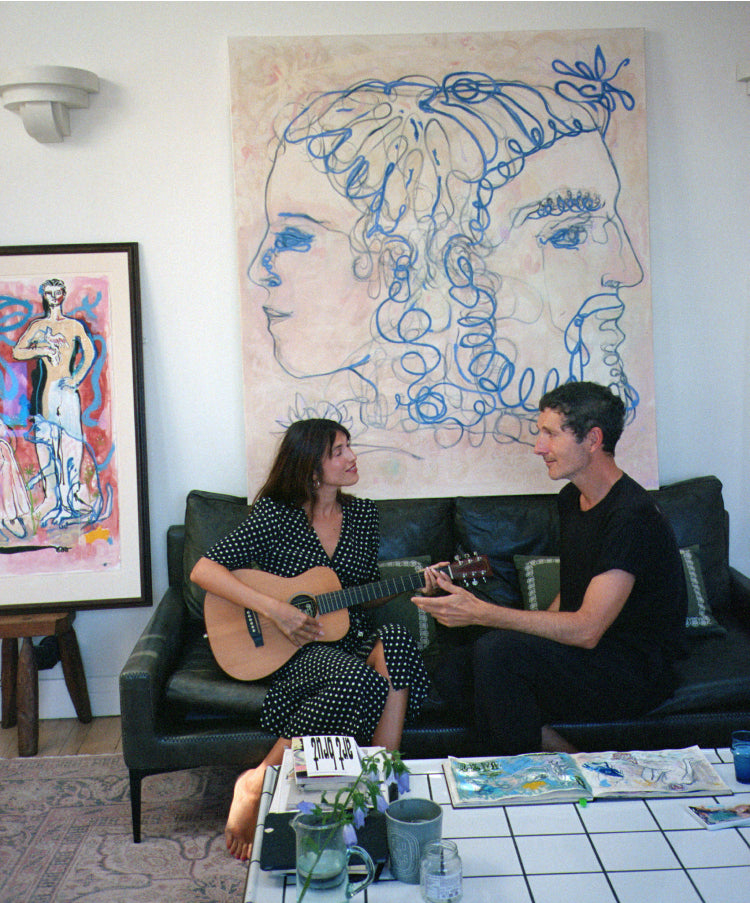
I like to believe that a successful work is, above all, a mirror for the one who stands in front of it — no matter the medium.
simon buret
MORE ARTIST ROOMS